

Last updated: 21 November 2026 · Written by Nouman Sajjad, Founder, Anchor Web Agency
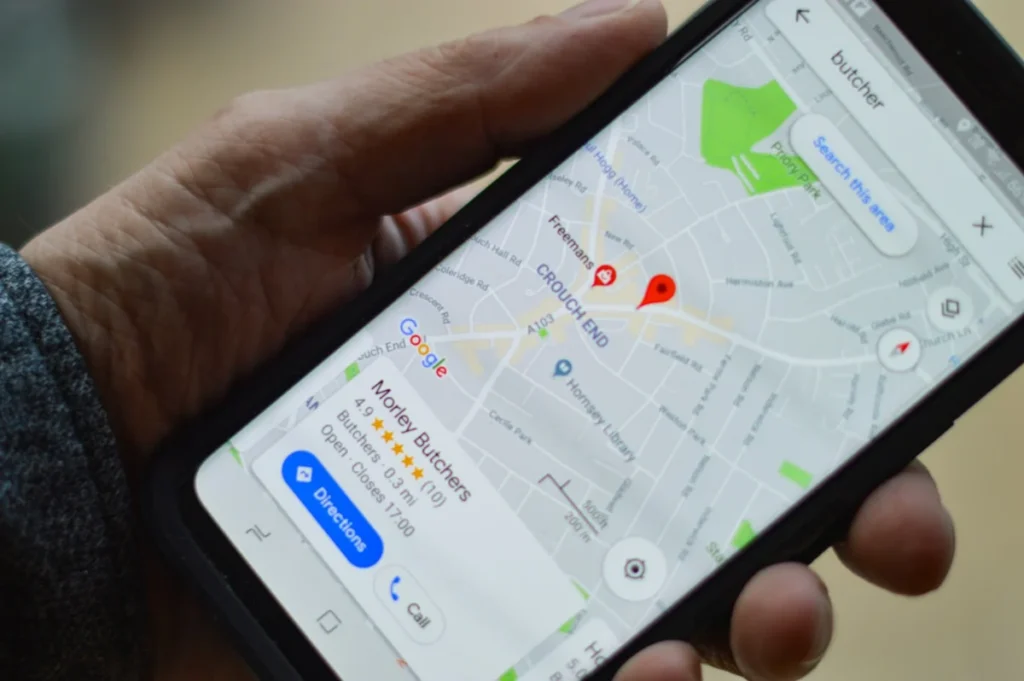
Search “electrician near me” on a phone in Harborne and Google shows a map, three nearby businesses with their star ratings and phone numbers, and buttons to call or get directions. Getting into that box, and ranking for searches that name your part of Birmingham, is what local SEO is about.
We’re a founder-led agency at 48 Stirling Road in Birmingham, and Nouman Sajjad has spent 10+ years building websites and running local SEO for small businesses. This guide explains what local SEO is, how Google picks local results and what it costs.

What Is Local SEO?
Local SEO (local search engine optimisation) is the work that helps a business appear when people search for a product or service in a specific area, both on Google Maps and in the ordinary results for searches such as “plumber Birmingham” or “dentist near me”. It is aimed at customers who are ready to ring, visit or book, rather than people researching a topic.
Those local results usually appear as the local pack, which marketers also call the map pack or snack pack: a map plus three businesses with their opening hours, reviews and a link for directions. The block sits above the normal organic listings, so for a Kings Heath café or a Digbeth garage it is often the first thing a customer sees.
Local SEO covers two places at once: your Google Business Profile feeds the map, and your website feeds the organic results underneath. It is the online version of word of mouth.
How Does Google Decide Which Local Businesses to Show?
Google says local results are mainly based on three factors: relevance, distance and prominence, which Google also calls popularity. Its Business Profile Help page, Tips to improve your local ranking on Google, describes each one.
Relevance is how well your profile matches what someone typed, so complete, detailed business information helps Google connect you to the search. Distance is how far your business is from the person searching, a fixed factor you can’t change.
Prominence is how well known your business is. Google names how many websites link to your business and how many reviews you have among the signals, and says more reviews and positive ratings can help. The same page states there is no way to request or pay for a better local ranking.
Local SEO vs SEO: What Is the Difference?
Local SEO is a branch of SEO that targets customers in a defined area, while national or traditional SEO aims to get a website onto the first page across the whole country for searches with no location attached. Global SEO goes a step further and targets several countries, often in several languages.
All three share foundations, such as a fast, crawlable website and useful content, which our guide to what SEO is explains. The difference is where you want to appear and which signals weigh most.
| Feature | Local | National | Global |
|---|---|---|---|
| Who you want to reach | People in a town, city or service area | People anywhere in the UK | People in several countries |
| Where you appear | Local pack, Google Maps and organic results | Organic results | Organic results in each country’s version of Google |
| Signals that weigh most | Business Profile, reviews, consistent business details, location pages | Content depth, backlinks, technical health | As national, plus language and country targeting |
| Example | A roofer covering Birmingham and Solihull | A UK-wide online shop | A brand selling into Belgium and France |
Most small businesses need both: local SEO for the searches that bring work in, and the wider basics so the website itself ranks.
Why Is Local SEO Important for a Small Business in Birmingham?
Local SEO matters for a small business because people searching with a place name or “near me” usually want to buy soon, and the local pack puts a handful of businesses in front of them before any website.
For a sole trader, that is a fairer contest than national search. Because distance and relevance are part of the ranking, a well-run profile for a Moseley hairdresser can sit alongside larger national chains for searches made close by.
Plumbers, cleaners and decorators who travel to customers can show a service area instead of a home address and still compete across the city. When we built the website for Prestige Painting Solutions, a painting and decorating company in Manchester, we built it around Manchester-focused service keywords for exactly this reason.
What Does a Google Business Profile Do for Local SEO?
A Google Business Profile is the free listing that supplies most of what appears in the local pack and on Google Maps, so it is the first job in any local SEO plan.
Google’s own advice is to verify the profile, keep your information complete and accurate (address or service area, opening hours, business category and attributes), add photos and videos, and reply to reviews. The primary category is one of the clearest relevance signals you control.
A profile also needs current hours and fresh photos. Our Google Business Profile management service handles this monthly, and for Prestige Painting Solutions we set up the profile alongside the website and schema. If your listing has vanished, see why a Google Business Profile is not showing. Claim Bing Places and Apple Business Connect with the same details too.
What Are Citations, and Why Does NAP Consistency Matter?
A citation is any online mention of your business name, address and phone number (NAP), and local SEO depends on those details matching everywhere they appear.
If Yell lists “Smith & Sons Roofing” with an old landline while your profile says “Smith and Sons Roofing Ltd” with a mobile number, search engines see two slightly different businesses. Repeated across a dozen directories, that mismatch sends conflicting signals.
Start with the directories customers actually use: Yell, Bing Places, Apple Maps, Facebook and the sites for your trade, such as Checkatrade for builders or Tripadvisor for restaurants. Local citation building is part of our Growth SEO plan (20+ UK directories) and Authority SEO plan (40+ UK directories), but not Starter SEO.
How Do Local Keywords and Location Pages Help?
Local keywords tell Google what you do and where you do it, and your page titles, headings and copy are where you state that clearly.
You don’t need to write “near me” on your website to show for near-me searches, because Google uses the searcher’s location. Service-plus-place phrases such as “emergency electrician Erdington” carry clearer intent and are easier to target. Google Keyword Planner is a free way to find them.
If you serve several areas, give each important one a genuine page with something specific to say, not a template with the town name swapped. Put your NAP in the footer and add LocalBusiness schema markup, a form of structured data, so search engines read your details without guessing. Our local SEO services in Birmingham cover keywords, service pages and location pages.
How Do Google Reviews Affect Local Rankings?
Google reviews affect local rankings because Google counts them as part of prominence, and they are also what customers read before deciding to ring you.
Google says replying to reviews shows you value feedback, and positive reviews with helpful replies can help a business stand out. Most happy customers won’t review unless asked, so build the request into your routine: a link in your email signature, a QR code on the invoice or a message after the job.
Reply to every review, keeping replies to negative ones calm and specific. Our guide on how to get more Google reviews covers wording and timing.
How Much Does Local SEO Cost?
At Anchor Web Agency, local SEO costs from £199 a month, with three packages at £199, £399 and £699 a month, all rolling monthly with no lock-in.
What you pay with any provider depends on competition, how many locations you cover and how much content, citation and link work is included. We’d rather show our own prices than quote market averages we can’t source.
| Plan | Price per month | Local SEO work included |
|---|---|---|
| Starter SEO | £199 | Google Business Profile setup and optimisation, up to 10 keywords, on-page work on up to 5 pages |
| Growth SEO | £399 | Business Profile optimisation and review strategy, citations on 20+ UK directories, up to 25 keywords and 15 pages |
| Authority SEO | £699 | Advanced Business Profile strategy, citations on 40+ UK directories, link building and digital PR |
When comparing quotes, ask which of these jobs is included, not just the monthly figure. Full details are on our pricing page.
How Long Does Local SEO Take to Work?
Local SEO shows its first changes faster than most other SEO, because profile fixes can be made in an afternoon, but steady rankings for competitive searches take months of consistent work.
Rankings for your location pages follow the normal organic timeline, which our guide on how long SEO takes puts at three to six months for meaningful movement on a small business website. A search like “solicitor Birmingham” is far more competitive than a trade search in a smaller town, so it takes longer.
Treat it as ongoing work, not a one-off project, because reviews, posts and citations keep needing attention.
How Can You Improve Your Local SEO Ranking?
You improve a local SEO ranking by working through the factors you control and then measuring the results honestly. This short local SEO checklist for small businesses puts them in a sensible order:
- Verify your Business Profile and choose the most accurate primary category.
- Complete every field, including hours, address or service area, services and photos.
- Match your NAP exactly on your website and in every directory.
- Build one page per main service, plus pages for areas you genuinely serve.
- Ask every happy customer for a review and reply to all of them.
- Keep your business name real, because adding keywords to it breaks Google’s guidelines and can get a profile suspended.
- Track results in Google Search Console, Google Analytics and your Business Profile performance report.
Check your own position, and any competitor’s, in a private browser window, because Google personalises results.
Frequently Asked Questions About Local SEO
Is local SEO worth it for a small business?
Local SEO is usually worth it for a business that serves customers in a defined area, because those searches come from people nearby who are ready to make enquiries. It is less useful for a business selling only online across the UK. Results vary by trade and competition, and no one can guarantee rankings.
What is the difference between local SEO and organic SEO?
Organic SEO aims at the standard list of web results, while local SEO also targets the map results and searches with a place in them. A local business usually needs both, because the local pack and the organic results often appear on the same page.
How do you do local SEO for multiple locations?
For multiple locations, give each branch with a staffed address its own verified Business Profile and its own page on your website, with that branch’s NAP, hours and photos. A service-area business with one base should use one profile with a service area, and create pages only for the areas it genuinely covers.
Do I need a website for local SEO?
You can appear on Google Maps with a Business Profile alone, but a website gives Google more to judge relevance by and lets you rank in the organic results as well. If you don’t have one yet, our websites start from £499.
Want Help With Local SEO in Birmingham?
Tell us your business name and the areas you cover, and we’ll tell you what we’d fix first and the cost. We’re at 48 Stirling Road, Birmingham B16 9BL, and we reply on WhatsApp within minutes and by email within 24 hours, Monday to Saturday, 08:00–20:00.