

Last updated: 20 November 2026 · Written by Nouman Sajjad, Founder, Anchor Web Agency
The landing page vs homepage question comes down to one thing: what did the visitor click just before they arrived? Your homepage is the front door to the whole website, while a landing page is a standalone page built around one action. Mixing them up is where small business ad spend gets wasted.
This guide covers the purpose of each page, when your homepage is a perfectly good entry point, and when your ads need a page of their own.
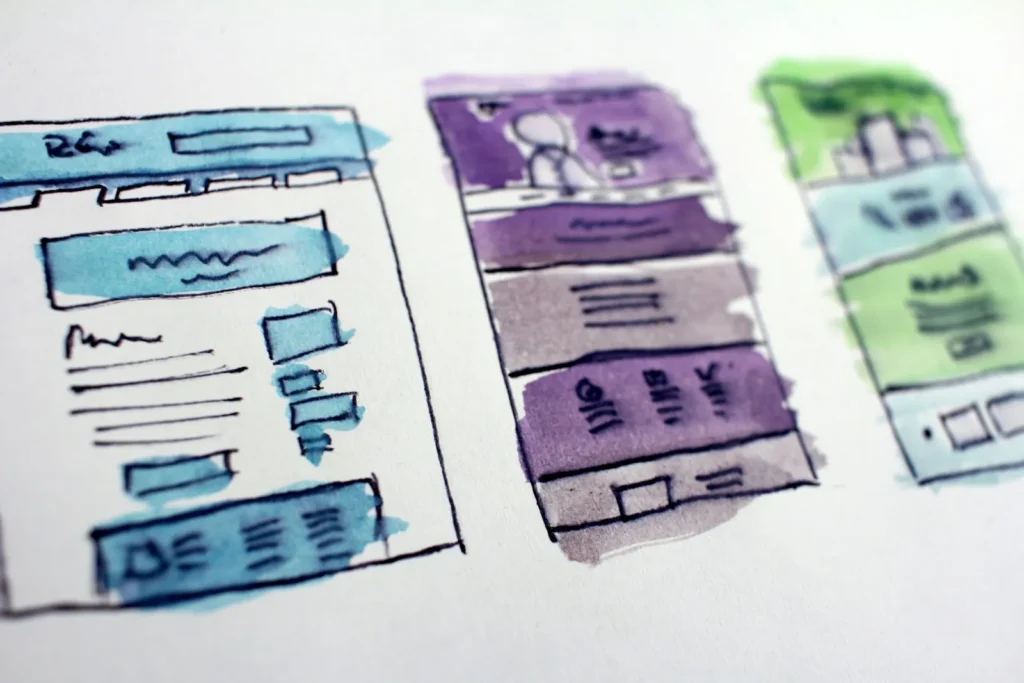
Landing Page vs Homepage: What’s the Difference?
A homepage introduces your whole business and lets visitors explore, while a landing page is a single page built to get one audience to take one action. If your ad promises a specific service or offer, send that traffic to a landing page and keep the homepage for branded, organic and direct visitors.
Think of the homepage as the lobby at the root of your domain. It serves every kind of visitor, so it carries broad navigation, header menus, footer links and several calls to action: plenty of exits, which is fine for someone who came to explore.
A landing page has one door in. It drops most of the menu, speaks to one audience and repeats a single call to action, so its conversion rates are easier to read and improve.
| Aspect | Homepage | Landing page |
|---|---|---|
| Purpose | Introduce the business and route visitors | Get one audience to take one action |
| Typical traffic sources | Branded search, organic search, direct visits, referrals | Google Ads, Meta Ads, email, one social campaign |
| Navigation | Full menus and footer | Minimal or none |
| Calls to action | Several, for different buying stages | One single goal, repeated |
| Lifespan | Permanent | Per campaign, or evergreen for a core service |
| How you measure it | Engagement and clicks through to key pages | Enquiries, cost per enquiry and their quality |
What Does a Homepage Do That a Landing Page Can’t?
A homepage does the orientation work a landing page skips: it tells a first-time visitor who you are, what you offer and where to go next. That suits people arriving from a referral or a branded search, who haven’t been promised one offer yet.
Spark Care, a care technology provider we built for, offers fall detection, IoT solutions and professional services, so its site organises everything under clear navigation for multiple audience types. One landing page couldn’t carry that range.
That answers landing page vs webpage and website vs landing page too. Every landing page is a webpage, but an about page or blog post supports exploring, while a landing page exists for one conversion. A website is the multi-page experience; the landing page is one stop inside it. A hero section is only the top of a page (headline, image and button), so a homepage hero can look like a landing page without the page being built for one action.
What Kinds of Landing Page Are There?
Landing pages come in a few common types, and they differ mainly in what they ask the visitor to do.
| Page type | What it asks for | Where small businesses use it |
|---|---|---|
| Lead generation page | Name, phone or email through a short form | Quote requests for trades and local services |
| Click-through page | A click to the next step | Warming visitors up before a booking or checkout |
| Sales page | A purchase on the page | Courses, digital products and one-off offers |
| Squeeze page | An email address only | Newsletter or download sign-ups |
On landing page vs splash page: a splash page sits in front of a website and leads into it, with no conversion goal of its own. On landing page vs product page: a product page belongs to the shop’s navigation, whereas a campaign landing page for one product strips that away and adds persuasive copy, reviews and trust signals.
A microsite is a small separate site, often on its own domain. For a small business running ads, one well-built page on your main domain, backed by your case studies, usually does the job instead.
Do You Need a Landing Page for Google or Meta Ads?
You need a landing page for ads when the ad promises something specific, because the visitor expects the next screen to continue that promise. Someone who clicks an ad for “emergency plumber near me” wants a phone number and proof you cover their postcode, not a homepage slider about bathroom refits. That message match keeps high-intent visitors on the page.
In Google Ads, Quality Score is a 1–10 diagnostic at keyword level, built from expected click-through rate, ad relevance and landing page experience, which Google Ads Help describes as how relevant and useful your landing page is to people who click your ad. Each part is rated Above average, Average or Below average against other advertisers over the last 90 days. Google is clear that Quality Score isn’t itself an input in the ad auction, so treat it as a warning light rather than a target.
Our clearest proof is Prestige Painting Solutions, a Manchester decorator: alongside a new website, its Google Ads traffic went to a dedicated landing page, separate from the homepage. Between 12 February and 1 May 2026 the campaign produced 1,140 clicks and 81 leads at £23.97 per lead, and 33+ became paying customers (read the full case study). Keywords and tracking played their part too, but the page was built for that traffic. Our PPC management covers Google Ads and Meta Ads, including landing page creation.

When Is It Fine to Send Ad Traffic to Your Homepage?
Sending ad traffic to your homepage is fine when the campaign is about brand awareness, or when visitors need to see your full range before deciding. Retargeting warm audiences who already know you, and local businesses with diverse offerings, such as a restaurant or a multi-service contractor, can get decent results from a strong homepage.
Budget constraints matter too. If you are just starting out, a homepage with a clear value proposition above the fold, a phone number and one obvious button beats a rushed landing page with a weak headline. Some advertisers take a hybrid approach, adding a banner for ad visitors or using URL parameters to change the headline. Once you have several services or a meaningful budget, though, one general headline can’t match every ad.
What Should a Small Business Landing Page Include?
A small business landing page needs a headline that repeats the ad’s promise, one clear call to action and enough proof to earn trust. These are the elements we put on campaign pages:
- Matching headline: the same offer and place as the ad.
- One primary call to action: “Get a quote” or “Call now”, repeated at natural decision points.
- Short form: only the details you need at this stage, usually name, phone and postcode.
- Credibility signals: reviews, photos of real jobs and the areas you cover.
- Mobile-first, fast-loading layout: for Prestige Painting Solutions, most searchers were on their phones.
- Conversion tracking: calls, forms and the confirmation page, tied to each campaign.
Keep your logo, contact details and legal links even when you remove the main menu. Landing page examples for services usually lead with the job and the area, like Pitstop 66’s separate pages for supercar, classic and long-term car storage. Landing page examples for products lead with the product, price and delivery, while landing page examples for digital products, such as courses, lean on a preview and a sales-page style checkout.
For more small business landing page examples and landing page ideas for your website, browse our small business website examples.
How Many Landing Pages Should You Have?
You should have one landing page for each distinct offer, service or audience you advertise, not one per ad. A painter advertising interior and commercial work needs two pages; ten ads about interior painting can share one.
Pitstop 66 shows the pattern: one page per storage service, each aimed at a different kind of car owner. When one campaign underperforms, you change one page instead of rewriting your homepage.
Start with the service that earns you the most, then add pages as you add campaigns. Our Growth Ads plan includes one dedicated landing page and Authority Ads includes up to three (see our pricing), which is a realistic range for most small businesses.
Why Is My Landing Page Not Converting?
A landing page usually stops converting because it doesn’t match the ad, asks for too much, or loads slowly on a phone. Check these basics before blaming the platform.
| Symptom | Likely cause | What to try |
|---|---|---|
| Plenty of clicks, almost no enquiries | A generic headline that doesn’t match the ad or keyword | Rewrite the headline to repeat the ad’s offer and place |
| Visitors start the form but don’t finish | Too many fields, or questions asked too early | Cut the form to the essentials |
| Visitors leave quickly on mobile | Slow loading or a layout that breaks on phones | Compress images and test on a real phone |
| Landing page not working at all | Broken form, tracking or page errors | Send a test enquiry and check the confirmation page |
Don’t judge the page on bounce rate alone: someone who reads the offer and phones you has bounced too. Cost per lead, form completion rate and lead quality tell you far more. Competing buttons are worth removing before you touch the budget, and cheap leads that never become qualified jobs usually point to targeting, not design.
If the whole site is slow or throwing errors, start with our guide to a website not working or slow.
Landing Page vs Homepage: FAQs
Is a landing page the same as a homepage?
No, a landing page and a homepage do different jobs. A homepage gives a broad overview and lets visitors explore your site, while a landing page focuses on one offer and prompts one immediate action. Most businesses that advertise need both.
What is the difference between a landing page and a sales page?
A sales page is one type of landing page: it asks for the purchase on the page itself, usually with longer copy. Other landing pages ask for a lower-commitment step, such as a quote request or an email address. Service businesses usually need a lead generation page instead.
What is the difference between a landing page and a funnel?
A landing page is one page, while a funnel is the whole sequence a customer moves through: the ad, the landing page, the thank-you page and any follow-up calls or emails. A weak landing page limits every step after it.
Should I remove the navigation from a landing page?
Removing the main navigation usually helps a landing page stay focused, but it isn’t a fixed rule. Some visitors expect a menu and feel trapped without one, so keep your logo, contact details and essential links. With enough traffic, test both versions.
How much does a landing page cost?
At Anchor Web Agency, dedicated landing pages come with our Growth Ads plan (£299 a month, one landing page) and Authority Ads plan (£599 a month, up to three). Our pricing page doesn’t list a standalone landing page price, so if you only need the page, ask us for a quote. Full websites start from £499.
How long should I test a landing page against my homepage?
Give each version enough data to separate a real difference from random fluctuations. A common rule of thumb is at least 100 conversions or 30 days, whichever comes first. Keep the ad and budget the same, then compare cost per lead and lead quality.
Need a Landing Page That Matches Your Ads?
If your ads land on a page never built for them, we can show where a dedicated page would help. Websites start from £499, and landing pages come with our Growth and Authority ads plans. We reply on WhatsApp within minutes and by email within 24 hours, Monday to Saturday, 08:00–20:00.