

Last updated: November 2026
A customer who once typed “plumber near me” into Google might now ask ChatGPT, or read the AI Overview at the top of the results, before clicking a single link. So business owners keep asking us the same thing: does showing up in AI search need a whole new kind of optimisation?
This guide to SEO vs GEO (generative engine optimisation) explains the difference in plain English and shows what actually gets a small business into AI answers. It’s written by Nouman Sajjad, founder of Anchor Web Agency, who has 10+ years of experience building WordPress sites and handles SEO strategy for our clients himself.
Where we explain how Google AI Overviews, AI Mode or ChatGPT search work, we link to the official documentation from Google Search Central and OpenAI so you can check the source. If SEO itself is new to you, our guide to what SEO is covers the background.
SEO vs GEO: What’s the Difference?
SEO (search engine optimisation) helps your pages rank in Google’s normal results so people click through to your site; GEO (generative engine optimisation) aims to get your business mentioned or linked inside AI-written answers from tools like ChatGPT and Google AI Overviews. They aren’t rivals: Google says the same SEO best practices apply to its AI features, so GEO works best as SEO plus a few extra checks.
The real difference sits in the search output. A classic results page shows ranked links, and success means a click to your website. An AI answer is a written summary that may paraphrase several sources, and success means being one of the sources it names or links to, sometimes without anyone clicking at all (a zero-click search).
The overlap is bigger than the hype suggests. Google’s documentation says there are no additional requirements to appear in AI Overviews or AI Mode, and no special optimisation is necessary. ChatGPT search depends on OpenAI’s own crawler being allowed to read your site. Neither works without the basics: pages that can be crawled, indexed and understood.
So our honest answer to “SEO vs GEO?” is “both, in that order”. Fix the SEO foundations first, then make your content easy for an AI system to quote accurately. Search intent matters here too: in our view, AI answers absorb many informational questions, while transactional searches, where someone is ready to book or buy, still end at a destination such as your website or Business Profile.
What Do SEO, AEO and GEO Actually Mean?
SEO, AEO and GEO are three names for overlapping jobs: SEO earns organic rankings in search results, AEO (answer engine optimisation) shapes content into direct answers for featured snippets and voice assistants, and GEO aims for mentions and citations in AI-generated answers.
The industry hasn’t settled on one label. You’ll also see AIO, LLM optimisation and “AI SEO” used for the same idea, and AIO is easily confused with AI Overviews, Google’s own AI summaries. The acronym matters far less than the work behind it.
In practice, all three share one toolkit: descriptive headings in a sensible hierarchy (one H1, then H2s and H3s that read like an outline), a direct answer near the top of each section, verified facts a reader can check, and a site that search engines can crawl. AEO grew out of featured snippets and voice search. GEO is the newer layer for large language models (LLMs) such as ChatGPT, Gemini and Perplexity, which summarise several pages into one reply instead of listing them.
If someone sells you GEO as a separate product that replaces SEO, ask what it does that good SEO doesn’t. Usually the honest answer is monitoring which AI tools mention you. That monitoring is useful, but it isn’t a different discipline.
How Do Google AI Overviews and AI Mode Choose Which Sites to Show?
Google AI Overviews and AI Mode choose supporting links from pages that are already indexed and eligible to appear in Google Search with a snippet, and Google states there are no extra technical requirements beyond that.
Both features may use a technique Google calls “query fan-out”: behind the scenes, while the response is generated in real time, the system runs several related searches across subtopics and data sources, then shows links to the pages that support the answer. Relevance to each sub-question matters, so a page that answers one narrow follow-up question well can appear even if it doesn’t rank first for the main search.
Google also says AI Overviews appear only when its systems decide they add something beyond classic results, so many searches don’t trigger one. AI Mode is aimed at longer questions that need comparisons or reasoning. The two features may use different models and techniques, so the links they show can differ for the same topic.
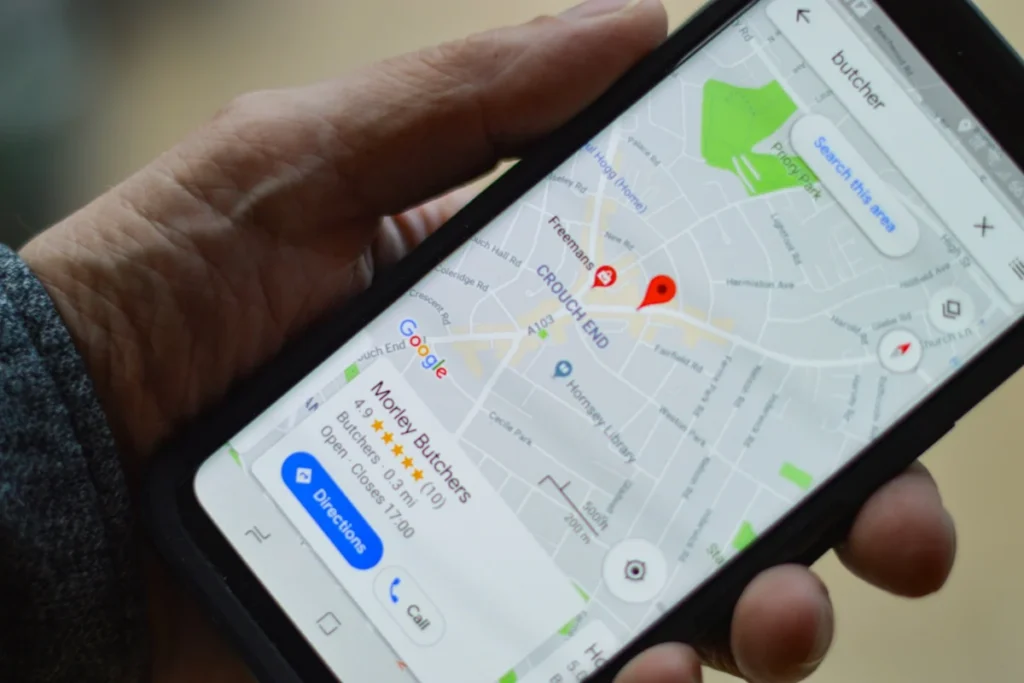
The checklist Google gives is plain SEO: allow crawling in robots.txt and in your CDN or hosting firewall, use internal links so crawlers can discover important pages, offer a good page experience that is fast, user-friendly and works on mobile, keep key content in text, support it with high-quality images and video, make structured data match the visible text, and keep your Business Profile and Merchant Center details up to date. For a local business, that last point means your Google Business Profile matters for AI answers as well as the map pack.
How Does ChatGPT Search Find Your Website?
ChatGPT search finds websites through OpenAI’s OAI-SearchBot crawler, and OpenAI says sites that opt out of OAI-SearchBot will not be shown in ChatGPT search answers, although they can still appear as navigational links.
OpenAI runs separate crawlers for separate jobs, and robots.txt controls each one independently. OAI-SearchBot surfaces websites in ChatGPT’s search features. GPTBot crawls content that may be used to train OpenAI’s foundation models. ChatGPT-User visits a page when a person asks ChatGPT to look at it, and OpenAI notes that robots.txt rules may not apply to those user-triggered visits.
That split gives you a genuine choice. A business can allow OAI-SearchBot so it can appear in ChatGPT answers while blocking GPTBot if it doesn’t want its content used for training. OpenAI says it can take around 24 hours after a robots.txt update for its search systems to adjust.
The mistake we look for first is accidental blocking: a security plugin, firewall rule or copied robots.txt file that turns crawlers away without the owner knowing. You can read your own rules at yourdomain.co.uk/robots.txt, and running your homepage through our free SEO audit tool is a sensible first check.
Where Do SEO and GEO Overlap, and Where Do They Differ?
SEO and GEO overlap on everything that makes a page trustworthy and easy to crawl, and they differ mainly in what the result looks like, how people phrase their searches and how you measure success.
| Question | SEO | GEO |
|---|---|---|
| What are you aiming for? | A high position in a ranked list of results | A mention or link inside an AI-written answer |
| Where does it appear? | Google and Bing results pages | ChatGPT, Google AI Overviews and AI Mode, Gemini, Perplexity |
| How do people search? | Short keyword phrases | Longer, conversational questions with follow-ups |
| What does the visitor do? | Clicks through to your page | Reads a summary, then may click a cited link |
| Which crawler must be allowed? | Googlebot (and Bingbot for Bing) | Googlebot for AI Overviews and AI Mode; OAI-SearchBot for ChatGPT search |
| How do you measure it? | Rankings, clicks and enquiries in Search Console and GA4 | Search Console totals plus manual checks of what AI tools say about you |
Notice how many rows lead back to the same foundations: a clear site structure, high-quality pages and an authoritative reputation. Being mentioned and linked by other reputable websites is a long-standing SEO signal, and because AI answers are assembled from pages on the web, we’d expect independent mentions to help there too. Our guide to what backlinks are explains how small businesses earn them without risky shortcuts.
GEO advice often adds that content must stay fresh, while evergreen SEO pages can hold rankings for years with little change. We’d treat recency as a reason to keep prices, dates and facts updated, not to rewrite pages for the sake of it. The one row that is genuinely new is the crawler list. A site can rank well in Google for years without anyone checking whether OpenAI’s crawler is allowed in, and that single setting decides whether ChatGPT search can show it at all.
How Can a Small Business Show Up in AI Answers?
A small business shows up in AI answers by making sure search and AI crawlers can reach its website, answering customers’ real questions in clear text, and keeping its business details consistent everywhere it appears online. Work through these steps in order:
- Confirm you’re indexed: search site:yourdomain.co.uk, verify the site in Google Search Console and submit your XML sitemap. A page that isn’t indexed can’t be a supporting link in AI Overviews; our guide to getting your website on Google walks through it.
- Let the right crawlers in: check that robots.txt, your security plugin and any CDN allow Googlebot and OAI-SearchBot.
- Find the questions customers ask: use Search Console, Google’s “People also ask” box and your own enquiries. Our guide to keyword research for small businesses shows the free methods.
- Answer one question per section: phrase the heading like the question in natural language, open with a one-sentence answer that leaves no ambiguity, then add the detail and a few FAQs. Our on-page SEO checklist covers title tags, meta descriptions, subheadings and alt text.
- Put facts in text: prices, service areas, opening hours and qualifications belong in the body text, not only in images, PDFs or content that needs JavaScript to load.
- Keep structured data honest: schema should match what visitors can see. Google says no special schema is needed for its AI features.
- Make your details match everywhere: use the same business name, address and phone number on your site, your Business Profile and directories, and keep earning reviews. Here’s how to get more Google reviews.
This is the same groundwork we do for clients. For Prestige Painting Solutions in Manchester, we built a website with separate pages for interior, exterior, commercial and residential work, set up the Google Business Profile and added schema markup. The Google Ads side of that project produced 81 leads at £23.97 per lead, which our Manchester painter case study breaks down.

For Pitstop 66, a premium car storage business, we built separate landing pages for supercar, classic and long-term storage and targeted local SEO across Manchester and the North West. Clear, single-topic pages like these give an AI system a precise, factual answer to quote when someone asks a specific question. Over time, related pages and guides form topical clusters, which makes a well-structured site easier for people and crawlers to follow.
How Do You Measure Whether AI Search Is Sending You Customers?
You measure AI search visibility in two ways: Google includes clicks and impressions from AI Overviews and AI Mode in the “Web” search type of Search Console’s Performance report, and for ChatGPT you check the answers yourself and watch your analytics for visits referred from AI tools.
There’s no separate AI report in Search Console, so AI traffic sits inside your normal totals. Google also says that when people click from results pages with AI Overviews, those clicks are higher quality, meaning visitors are more likely to spend more time on the site. That makes your usual KPIs (organic traffic, click-through rate and conversions such as calls and quote requests) more useful than raw clicks alone.

For the manual check, once a month ask ChatGPT, Gemini and Google’s AI Mode the questions your customers ask, such as “who builds websites for painters in Manchester?”. Note whether you’re mentioned, which sources are cited, which competitors are named instead and whether the facts about you are right. Some tools sell this as AI “share of voice”, but a simple spreadsheet works for most small businesses. A classic ranking is fairly deterministic apart from personalisation and location, whereas AI answers vary from one session to the next, so treat each check as a sample, not a ranking.
Will AI Replace Web Designers and SEO?
In our view, AI is unlikely to replace web designers or SEO outright, because AI tools can generate pages and code but still need someone to decide what the business offers, check the facts and keep the site secure and accurate.
AI already does real work. Google AI Studio can generate a working web app from a text prompt, and chat assistants draft copy and code quickly. What those tools can’t supply is the knowledge only the business has: its prices, service areas, reviews, case studies and the judgement about what a customer needs to see first.
Generative answers also depend on the pages that exist on the web. If every site filled up with the same AI-written copy, AI tools would have less original material to quote. That’s why we think first-hand detail is becoming more valuable, not less, and why “SEO vs AI” is the wrong question: AI changes where people see your business, and SEO is how you make sure what they see is right.
If you’re weighing a DIY builder against hiring someone, our comparison of a website builder vs web designer sets out the trade-offs. For reference, our websites start from £499 and SEO from £199 a month, rolling monthly with no lock-in, and the Authority SEO package at £699 a month includes an AI search optimisation (GEO) strategy. Full details are on our pricing page.
Frequently Asked Questions About SEO, GEO and AI Search
Is GEO replacing SEO?
No, GEO isn’t replacing SEO; Google states that SEO best practices remain relevant for its AI features and there are no additional requirements to appear in AI Overviews or AI Mode. GEO adds a few checks on top, such as allowing OAI-SearchBot for ChatGPT search and reviewing how AI tools describe your business.
Do I need an llms.txt file or special schema to appear in AI Overviews?
No, you don’t need an llms.txt file or special schema to appear in Google’s AI Overviews. Google says you don’t need to create new machine-readable files, AI text files or markup, and there’s no special schema.org structured data to add. Normal structured data that matches your visible content is still worth having.
Which AI is best for website design?
No single AI is best for website design, because the tools do different jobs: chat assistants such as ChatGPT draft copy and code, while app builders such as Google AI Studio generate a working web app from a prompt. For a small business, the bigger question is who checks the result, connects the domain and keeps the site updated.
How do you make a website on Google AI Studio?
You make a website on Google AI Studio by opening Build mode, describing the site you want in the prompt box and letting it generate the code with a live preview. By default it creates a web app with a React front end and a Node.js server, which suits prototypes; a business website still needs its own domain, real content and SEO settings.
Can ChatGPT create an ecommerce website?
ChatGPT can help create an ecommerce website by writing product descriptions, page copy and code, but a working online shop still needs a platform for payments, stock and hosting, such as WooCommerce or Shopify. Our eCommerce website packages start from £499 for up to 10 products.
Can AI do website maintenance?
AI can help with parts of website maintenance, such as drafting content updates or explaining an error message, but updates, backups, security monitoring and fixes still need someone accountable for the site. Our website maintenance plans start from £29 a month and include WordPress updates, daily backups and security monitoring.
Ready to Show Up in AI Search?
Tell us your web address and the questions your customers ask, and Nouman will check whether search engines and AI crawlers can reach your site and what to fix first. If you’d rather hand the work over, our SEO services cover every step above, and our SEO agency in Birmingham page explains how we work with local businesses. We reply on WhatsApp within minutes and by email within 24 hours, Monday to Saturday, 08:00–20:00.