
SEO vs Google Ads is a trade-off between speed and cost. Google Ads can put you at the top of Google within days, but you pay for every click and the enquiries stop when you stop paying. SEO takes months, yet the clicks are free and keep coming. For most small businesses the answer is both, in the right order.
We run both for UK sole traders and small teams, so this guide compares them honestly: 2026 costs, speed, the map results, and which to start with if you can only afford one. To see what ongoing organic work involves, our SEO services page sets it out.
The short answer: Need enquiries this month? Start with Google Ads and a proper landing page. Want enquiries next year without paying for each one? Start SEO now. Can afford both? Run a small ads campaign while SEO builds, then move budget across as organic enquiries grow. Google doesn’t sell organic rankings, so SEO is the only route into the free results.
Key Takeaways
- Google Ads charges per click, can go live within a business day and stops when your budget does.
- SEO clicks are free, but results take months.
- Paying for Google Ads has no effect on your organic rankings. Google says so.
- At our 2026 prices (ex VAT), SEO starts at £199 a month; Google Ads management starts at £149 a month plus £300–£500 of ad spend.
- Nobody can pay for a better organic spot in the map results.
SEO vs Google Ads at a Glance
| SEO | Google Ads | |
|---|---|---|
| How you pay | A monthly fee or your own time. The clicks are free | Every click, from a budget you set, plus management if an agency runs it |
| Where you appear | Organic results and the map results | “Sponsored” spots above and below the organic results, and on Google Maps |
| How fast it starts | Months, not weeks | Usually within a business day of the ads being approved |
| When you stop paying | Rankings usually hold for a while, then slip | Ads stop showing straight away |
| Can you buy a better position? | No. Google doesn’t accept payment for organic rankings | Partly. Position depends on your bid plus ad and landing-page quality |
| Best for | Steady enquiries over the long term | Fast leads, testing and seasonal pushes |
| Our 2026 price (ex VAT) | From £199 a month | From £149 a month, plus £300–£500 ad spend |
What’s the Difference Between SEO and Google Ads?
Both put you in front of people searching on Google.co.uk. The difference is how you earn the spot, what it costs and how long it lasts.
How SEO works
Search engine optimisation (SEO) means making your website the most useful, trustworthy answer to what your customers search for. Google crawls your pages, stores them in its index and ranks them on relevance and quality: your content, how your site is built, how it works on a phone, and links from other websites (backlinks).
You can’t pay Google to rank higher; its own documentation says ranking is done programmatically. Progress shows in Google Search Console as impressions, clicks and average position.
How Google Ads works
Google Ads is Google’s pay-per-click (PPC) advertising. You pick the searches you want to appear for, write the ads and set an average daily budget. Every search triggers an auction, and your position depends on Ad Rank: your bid, the quality of your ad and landing page, and the context of the search. The highest bidder doesn’t automatically win.
You’re charged when someone clicks (cost per click, or CPC). On a busy day Google can spend up to twice your average daily budget, but never more than 30.4 times it in a month. Since October 2025, text ads sit under a “Sponsored results” label that searchers can hide with one click.
SEO vs SEM vs PPC: Where Search Engine Marketing Fits
The jargon in plain English:
- SEO: earning free (organic) listings in Google’s results and map results.
- PPC (pay-per-click): paying each time someone clicks your ad. Google Ads is Google’s PPC platform; Microsoft Advertising does the same on Bing.
- SEM (search engine marketing): any marketing aimed at search engines. Some use it for SEO and paid ads together; many mean paid search only.
So “SEO vs SEM”, “SEO marketing vs SEM” and “PPC vs SEO” all ask the same thing: free listings or paid ones? If an agency quotes for “SEM”, ask whether it includes any SEO work.
What Each One Costs: 2026 Prices for a Small Business
SEO costs time or a monthly fee, and the clicks are free. Google Ads has two costs: the clicks, which Google charges for, and whoever manages the account. Here’s the first year at our entry-level packages, excluding VAT.
| SEO (Starter) | Google Ads (Starter) | |
|---|---|---|
| Monthly fee to Anchor | £199 | £149 |
| Ad spend on top | None | £300–£500 suggested |
| Total per month | £199 | £449–£649 |
| First 12 months | £2,388 | £5,388–£7,788 |
| What’s left if you stop | Improved pages, and rankings that fade slowly | Campaign data. The ads stop |
Ads cost more each month but bring enquiries much sooner, so compare cost per enquiry over a year, not the monthly invoice. Bigger packages are £399 and £699 a month for SEO, and £299 or £599 for ads management with higher suggested spend. All are rolling monthly with no lock-in; see our pricing.

How Quickly Does Each One Work?
Google Ads is quick to start. Google says most ads are reviewed within one business day, so a campaign can be taking clicks within days. Allow a few weeks of tuning after that: blocking wasteful searches (negative keywords), adjusting bids and improving the landing page until the cost per enquiry settles.
SEO is slower. Google has to crawl and index your changes, then weigh your pages against everyone else’s. Low-competition searches, such as one service in one small town, tend to move first; competitive terms take months. Anyone promising page one by a set date is guessing: Google itself says no one can guarantee a #1 ranking.
Whichever you choose, track calls, forms and WhatsApp clicks in Google Analytics 4 and Google Ads, or you can’t compare the two fairly.
SEO vs PPC for Small Businesses: Which Should You Start With?
Start with Google Ads if…
- You need enquiries in the next few weeks: a new business, a quiet diary or a cash-flow gap.
- People search for what you do when they need it now, such as emergency call-outs.
- Your website is new and doesn’t rank yet.
- You want to test which services and areas bring paying work before building SEO pages for them.
- You have a landing page built to turn a click into a call. Without one, ads mostly burn money.
If that sounds like you, our PPC management service runs campaigns on exactly these lines.
Start with SEO if…
- You can wait a few months and would rather not pay for every enquiry.
- Your customers compare several businesses before getting in touch.
- Clicks in your market are expensive and your margins are thin.
- You rely on local customers who search “near me” and read reviews.
- Your total budget is nearer £200 a month than £500, where management plus useful ad spend doesn’t fit.
When to run both
Ads bring in work while SEO builds. The search terms report in Google Ads shows the exact searches behind your clicks and enquiries, so you can build SEO pages around the ones that already make you money. As those pages rank, reduce ad spend on searches where you appear for free.
Local SEO vs Google Ads: Winning the Map Results
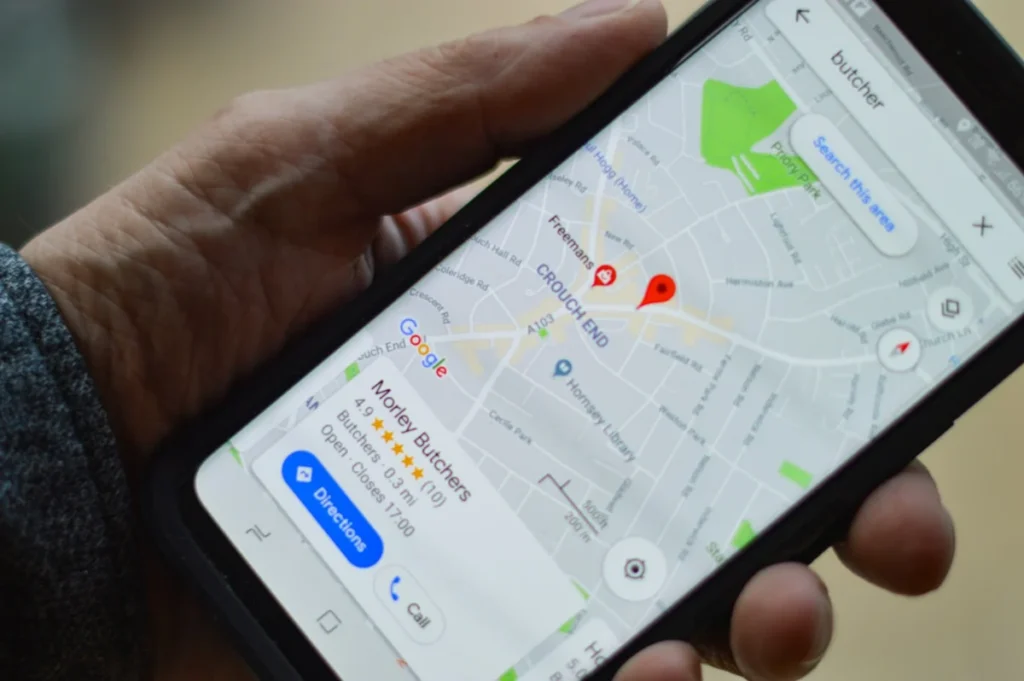
For trades and local services, the most valuable spot is often the map with three businesses under it, known as the local pack. Those free places come from your Google Business Profile, and Google is blunt: there’s no way to request or pay for a better local ranking. It ranks on relevance, distance and prominence, and prominence takes in your reviews and the websites linking to you.
Google Ads can still get you onto the map. With location assets linked to your Business Profile, your ads can appear beside, above or below results in Google Maps, marked as ads.
So local SEO earns the free map spot and Google Ads rents one next to it. If most customers are close by, chase the free spot first, because distance works for you. If you cover a wide area, ads let you appear in towns where you’re too far away to rank. Our local SEO services cover the profile, reviews and local pages.
What Using Both Looked Like for a Manchester Decorator
For Prestige Painting Solutions, a Manchester painting and decorating firm, we built a mobile-first WordPress site with service pages, set up local SEO with schema markup, and launched Google Ads pointing at a dedicated landing page with conversion tracking. Between 12 February and 1 May 2026, the Google Ads side produced:
- 11,700 impressions and 1,140 clicks
- 81 leads at £23.97 per lead
- 33+ leads who became paying customers, at least 4 in every 10
Those are Google Ads figures, so they show what paid search did. The SEO work is the slower half, and we haven’t published organic figures for it yet. Read the full case study: 81 leads in 12 weeks.


From experience
On the Prestige campaign, the ads sent people to a dedicated landing page and every enquiry was tracked. That’s how we know each lead cost £23.97. If you can’t see your cost per enquiry, you can’t judge whether ads or SEO is working harder for you.
Nouman Sajjad, Founder
The Verdict: SEO or Google Ads?
Google Ads vs SEO isn’t a choice you make once. For most UK small businesses, Google Ads is the faster fix and SEO is the better long-term asset:
- Need work this month? Start a small, tightly targeted Google Ads campaign with its own landing page.
- Can you wait a few months? Put the same money into SEO, starting with your Google Business Profile and one page per service.
- Can you fund both? Let ads pay the bills while SEO builds, then move budget across as organic enquiries arrive.
Avoid spreading £300 a month thinly across both, and anyone who guarantees rankings. Not sure where your site stands? Try our free SEO audit first.
FAQs
Does running Google Ads help my SEO rankings?
No. Google states that advertising with it has no effect on your site’s presence in its organic results, and that it never accepts money to rank sites. Ads can help indirectly, though: the search terms report shows which searches turn into enquiries, and you can build pages that target them organically.
Is SEO cheaper than Google Ads?
Per month, usually yes. Our SEO starts at £199 plus VAT, while Google Ads management starts at £149 plus VAT and you pay for the clicks on top. But ads bring enquiries sooner, so the fair comparison is cost per enquiry over a year or more, not the monthly invoice.
Can I do SEO myself instead of paying for it?
Often, yes. Google says a small local business can probably do much of the work itself, starting with its SEO Starter Guide. The basics are a complete Google Business Profile, one clear page per service and a fast mobile site. Paying for help mainly buys you time and experience.
What happens if I stop paying for Google Ads or SEO?
Stop Google Ads and your ads disappear the same day, along with the enquiries they brought. Stop SEO and your rankings usually hold for a while, then slip as competitors keep improving. That’s why SEO behaves more like an asset you build, and ads more like a tap you turn on and off.
What’s the smallest sensible budget to test Google Ads?
On our Starter plan we suggest £300 to £500 a month in ad spend, plus the £149 management fee (ex VAT). Much less and you rarely get enough clicks to learn what works. Keep the test tight: one service, one area and a landing page built for that search.
Can anyone guarantee me the top spot on Google?
Not in the organic results. Google says no one can guarantee a #1 ranking and warns against anyone who claims they can. With Google Ads you can bid for the top ad positions, but placement still depends on Ad Rank, which weighs your ad and landing-page quality as well as your bid.
Not Sure Which One Fits Your Business?
Tell us what you sell, where your customers are and what you can spend each month. We’ll give you a straight answer on whether to start with SEO, Google Ads or both, and what results are realistic. You’ll hear back within 24 hours, usually within a few hours.