

Written by Nouman Sajjad, Founder, Anchor Web Agency · Last updated: 9 November 2026
Does My Small Business Need a Website in 2026?
Most UK small businesses do need a website in 2026, because customers compare you online before they spend real money and a website is the one presence you own; the exceptions are businesses that are fully booked, sell only through someone else’s platform, or are still proving the idea.
After 10+ years building WordPress sites for small businesses, my honest answer depends on how customers find and check you. If you’re turning work away and every job comes by recommendation, a site won’t make you busier. For almost everyone else, no website means losing work you never hear about.
People who have researched a purchase now ask AI assistants too, and those tools only draw on what exists on the open web. A social profile is renting; a website is an asset that builds trust and stays yours.
When Can a Small Business Get By Without a Website?
A small business can get by without a website when demand already exceeds capacity, when every sale happens inside a platform, or when the owner hasn’t yet proved people will pay.
A startup in a spare room selling on Etsy or Ebay already has a marketplace bringing buyers. Ironing or window cleaning rounds often fill up through referrals and word of mouth. Well-kept Google Business Profiles plus a social page with real followers can carry that load for a while.
Every one of those routes has a ceiling, though. Referrals only reach as far as your network, and a marketplace audience comes with the platform’s guidelines, fees and customer service. When work slows, there’s no fallback you own and nothing taking messages outside business hours.
If you’re waiting, avoid long pay monthly contracts; some monthly plans carry a cancellation notice of up to 90 days. When you’re ready, a single page built without any coding on your part is enough to start.
What Are the Benefits of a Website for a Small Business?
The main benefits of a website for a small business are that it turns people who check you out into enquiries, lets strangers find you, and keeps working when you’re not.
Tradespeople, accountants, salons and solicitors all get looked up, even by a word-of-mouth customer checking they’re established and legitimate. A page showing who and where you serve, and the products or services you offer, protects your reputation at that moment.
Someone typing “plumber near me” is a high-intent searcher, and those searches become leads for whoever appears. An IT consultant can take bookings for consultations straight from a page.
A site is open 24/7, so a contact form sent at 11pm is waiting in the morning. For sole proprietorships, a site that wins one extra client a year can cover its cost, and you stop depending on platform rebranding you never agreed to. The hardest benefit to measure is avoiding invisible losses: recommended customers who searched, found nothing and called someone else.
Is a Facebook or Instagram Page Enough Instead of a Website?
A Facebook or Instagram page is a useful partner to a website, but not a full substitute, because you don’t control who sees it and it rarely appears for the search terms new customers type.
A Facebook for Business page takes under five minutes, it’s free, and needs no programming or HTML. For customer support and quick updates, social platforms work well. But attention is the currency they trade in, and anyone who built a following on MySpace knows how temporary that can be. A social page can’t match a custom domain for organic visibility or for appearing alongside map listings.
| Social page | Google Business Profile | Your own website | |
|---|---|---|---|
| Cost to start | Free | Free | One-off build plus hosting |
| Who sets the rules | The platform | You | |
| Found by people who don’t know you | Rarely | Locally, on Maps | Locally and further afield |
| Room for your own content | Posts and a short bio | Short description, photos, reviews | As many pages as you need |
| Can it be taken away? | Yes, at the platform’s discretion | Yes, at Google’s discretion | No, while you keep the domain and hosting |
Will a Website Help Customers Find Me on Google?
A website helps customers find you on Google and Bing because it gives search engines pages to rank for your services, not just your brand name.
Without one, you’re invisible for non-local search and most commercial searches. On your own site you control the title tags, submit an XML sitemap in Google Search Console and use robots.txt to guide crawling. Positive reviews, your star rating and consistent directory listings still matter locally, but a linked website gives Google more evidence. Page speed counts too; Google’s page experience guidance explains how its systems reward fast, usable pages, so we treat it as a real ranking factor.
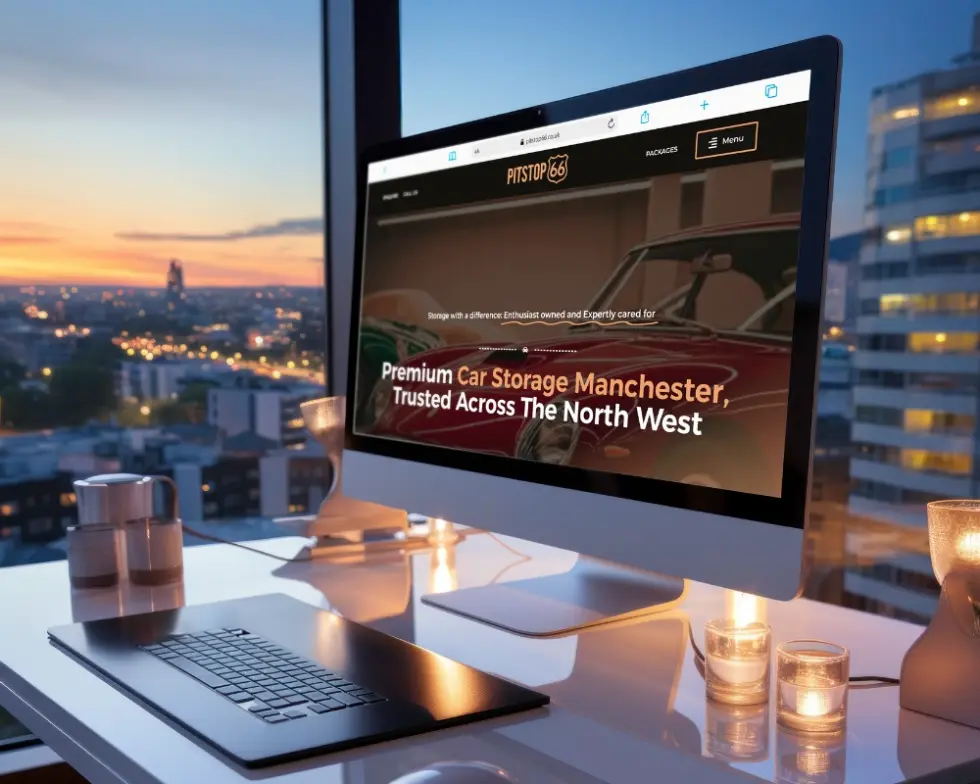
For Pitstop 66, a Manchester car storage business, we built service landing pages and local SEO for Manchester and the North West, and the first lead arrived within 3 weeks of launch. You don’t need thousands to see expected returns, though results vary and nobody can guarantee rankings. Analytics then shows customer behaviour and preferences, page by page.
Does a Website Make My Business Look More Trustworthy?
A well-kept website makes a small business look more trustworthy, because it gives people somewhere to verify your work, prices and history before they get in touch.
Buyers of professional services want proof. A portfolio of real jobs in customers’ words does more for credibility than a logo on a background photo, which can look amateurish. A short video can answer objections and show expertise before the first call.
The reverse is true too. A neglected site with old prices works against you, and about two years without updates gets you there. If nobody will maintain a site, a strong Google Business Profile is better.
Your site and Google Maps listing should back each other up, as Garden Valley Ranch, a rose farm and wedding venue, shows with its site on its Maps listing. Consistent local citations help too. Kept current, the site becomes your best salesperson.
Can a Website Win Enquiries While I’m Closed?
A website wins enquiries while you’re closed, because it answers questions and collects contact details after your opening hours end.
For a brick-and-mortar shop, the site is the shopfront people see first; for a service-based business, a clear description of services, testimonials and social proof do the persuading. Make contact one tap on mobile, with click-to-call and WhatsApp. A booking platform linked to your site lets clients pick a slot without ringing you.
Reporting is the other gain. Google Analytics, Search Console and tools such as Moz or SEMrush show which pages bring enquiries, so you spend on what works.
What Should a Small Business Website Contain?
A small business website should contain what you do, who and where you serve, proof you’re good at it, an easy way to get in touch, and your legal details.
Before choosing templates or a drag-and-drop builder, write down the three things the site must achieve, such as calls, bookings or payments; those goals set the pages and integrations. Treat it as your digital storefront and central hub:
- Service pages: one per main service, so each can appear in search engine results pages (SERPs).
- Proof: photographs of real work, reviews and accreditations with membership numbers.
- About page: people want to see who they’re hiring.
- FAQs: answers to the questions you hear on every call.
- Contact: phone, email, form and map on one page, as retailers like Loot Crate do.
- Legal details: a privacy notice and cookie banner; limited companies also show the registered name, registered number, part of the UK of registration and registered office address (trading disclosure regulations, 2015), plus a VAT number if registered.
Keep product photos and fresh content coming. Your domain points to an IP address on a server, and good hosting keeps that fast and secure.
Are Websites Worth the Money for a Small Business?
A website is worth the money when it brings in more work than it costs to build and run, and for local service firms that bar is usually low.
The costs are the upfront cost of the build, domain name registration, hosting, security and upkeep. Our Starter Business Website is £499 (3–5 pages), Professional is £799 with free first-year hosting, and Custom is £999; see full pricing or our guide to how much a website costs for a small business. Wix, Squarespace, Weebly or self-built WordPress cost less upfront but more time, because any site-building tool still needs someone to write and update pages. That’s where a design service earns its fee.
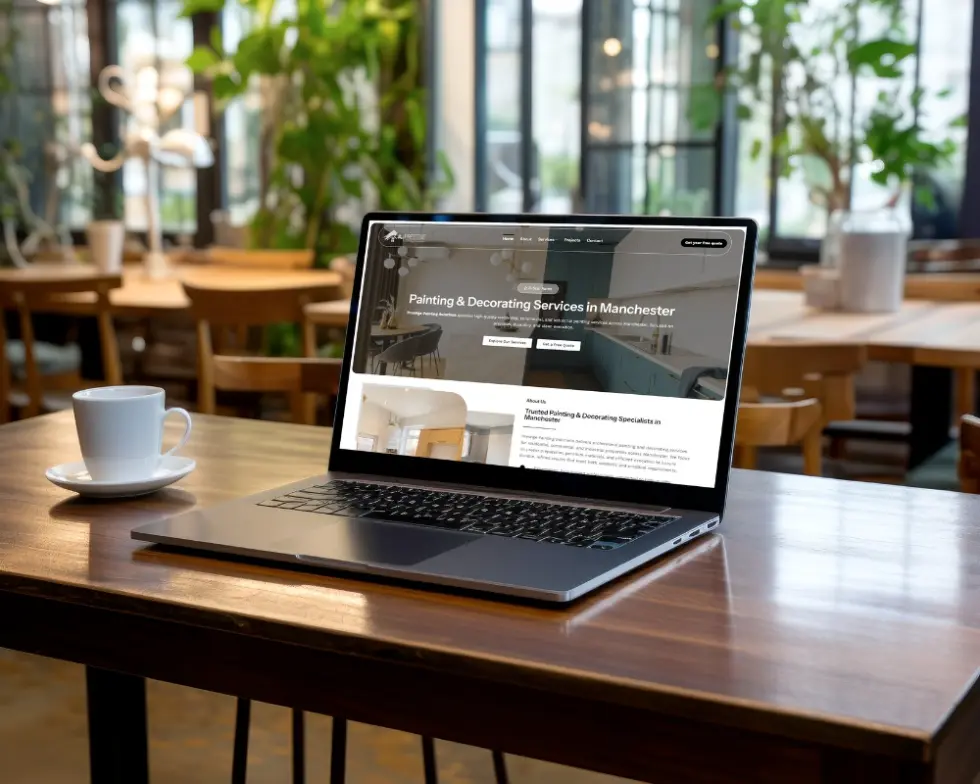
A site lifts extra enquiries fastest alongside advertising. Prestige Painting Solutions, a Manchester decorator, received 81 leads at £23.97 per lead between 12 February and 1 May 2026 from a new site plus Google Ads (case study); ad costs only work when the landing page converts. Clear pages also filter unqualified leads, so the phone rings with the right jobs and your sales process shortens. A fortnight of planning beats a ten-page site written in a hurry, whatever your trade.
How Do I Create a Website for My Business?
You create a website for your business in four stages: secure a domain, choose hosting, plan and build the pages, then launch and connect to Google.
- Pick a memorable domain: a short .co.uk suits a UK business; a gTLD such as .plumbing works if your name is taken.
- Choose hosting: shared hosting suits most small sites; a dedicated server is for heavy traffic. Domain and hosting are the main running costs after the one-off build.
- Plan pages and features: settle the layout, colour scheme, navigation and functionality, such as a booking system or lead generation form. Skip a one-page design if you offer several services.
- Launch and measure: connect Search Console and analytics, link your Google Business Profile and start local SEO.
Do you need a web designer? DIY felt daunting ten years ago and is easier now, but DIY sites often stall at the writing. Some providers promise a site live in five days; our typical build takes 2–4 weeks because copy and structure are planned. There’s no magic two seconds load rule, but slow pages lose visitors. See our web design services or, if you’re local, web design Birmingham, compare quotes, and ask us for a free quote.
Do I Really Need a Website in 2026?
You don’t legally need a website in 2026, but for most small businesses it has gone from novelty to luxury to necessity. A Google Business Profile and social page give you an online presence, yet leave you relying on two companies’ rules. A managed build means you don’t need technical expertise. If you can name three reasons customers check you before buying, you need one. A personal website is worth it for freelancers who want a profile they own.
Why Would a Business Choose Not to Have a Website?
A business usually goes without a website because it’s full through networking and referrals, sells entirely inside a platform, or is still testing the idea. Selling to twenty people first is sensible, and the site you build afterwards will be sharper. Others have traded for twenty years without one and think it’s too late; it isn’t.
What Can I Use Instead of a Website?
The strongest stand-in for a website is a complete Google Business Profile, backed by Instagram or Facebook and local directories. Freelancers can use Upwork, and US platforms such as Angi and Thumbtack offer built-in audiences. The trade-off is control: an algorithm decides your reach, and a platform can suspend your account with little chance to appeal.
Do I Need a Website to Register a Limited Company in the UK?
You can set up and run a UK limited company without a website. Once you publish one, the legal details apply: your business name as registered, the disclosures listed above, a privacy policy and a cookies notice. Commercial clients and procurement teams also expect a site before trusting you with larger work.
How Long Does It Take to Get a Small Business Website Live?
A typical small business website takes 2–4 weeks with us, and online shops or complex sites take longer. AI tools draft faster, but planning pages, writing copy and testing every contact form takes time. Register your domain on day one so email and branding are ready.
Is It Too Late to Get a Website if I’ve Traded for Years Without One?
It’s never too late to get a website, and established firms often gain traction faster because they have reviews and success stories ready. A company registered at Companies House a decade ago, or one meaning to get online for four years, already has a reputation to show. A site helps with hiring too, because candidates check you out.
What Is the Best Website for a Small Business That Sells Products?
The best website for a small business that wants to sell goods online is usually Shopify or WooCommerce, as both handle secure transactions, inventory and checkout. Shopify suits sellers wanting Shopify POS for in-person sales; WooCommerce suits WordPress users. An AI store builder can draft a theme, but buyers at a distance still need clear product copy. Our WooCommerce vs Shopify guide compares both, and our shops start at £499.
Do I Need a Website to Use Stripe?
You don’t strictly need a website to use Stripe: during account activation, Stripe asks for a URL for any website, social media profile or mobile application you use, or a description of what you sell if you have none. Payment Links let you take card payments without a site. That isn’t universally enough, though: once you add ecommerce, point-of-sale or all-in-one payment processing, a proper website gives customers confidence to pay.