

You’ve got a business to run. Customers to find. Bills to pay. And somewhere between all of that, you know you need a website. But every time you search for pricing, the numbers are all over the place. £500 here, £10,000 there. It’s frustrating, and it makes you feel like you’re about to get ripped off.
You’re not alone. Website cost is one of the most common questions small business owners in the UK ask before getting online. The honest answer?
A small business website in the UK costs between £299 and £5,000+ in 2026. A specialist agency like Anchor Web Agency builds professional WordPress websites from just £499 including first-year hosting. Freelancers typically charge £500 to £3,000 while traditional agencies start from £900. Ongoing costs for hosting, maintenance, and domain add £500 to £2,000 per year.
However, the real question isn’t just “how much?” It’s “what am I actually paying for, and is it worth it?” This guide breaks everything down so you can set a realistic budget and avoid the hidden costs that catch most people out.
What Affects the Cost of a Small Business Website?
Before looking at specific numbers, it helps to understand what actually drives the price up or down. Not all websites are created equal, and knowing these factors will help you compare quotes properly.
Number of pages. A simple five-page website (home, about, services, contact, blog) costs far less than a 20-page site with multiple service categories, team profiles, and location pages. More pages mean more design work, more content, and more testing.
Design approach. A template-based WordPress site where the layout is pre-built costs less than a fully bespoke design created from scratch. For most small businesses, a professionally customised template looks excellent and keeps costs sensible.
Features and functionality. A basic brochure site is straightforward. However, once you add booking systems, contact forms, live chat, payment gateways, or customer portals, the price climbs. Only pay for features you’ll actually use on day one. You can always add more later.
Who builds it. This is the biggest factor. A DIY website builder, a freelancer, and an agency all charge very differently. Each option has trade-offs in cost, quality, and ongoing support.
SEO setup. A website that nobody can find on Google is a waste of money. Basic SEO setup (page titles, meta descriptions, site speed, mobile-friendliness) should be included as standard. If it’s not, you’ll pay for it later in lost customers.
Content creation. Some providers include copywriting and images. Others expect you to supply everything. If you need professional content written for you, factor that into your budget.
Website Cost Breakdown for UK Small Businesses in 2026
Here’s what you can realistically expect to pay across the four main routes to getting your business online.
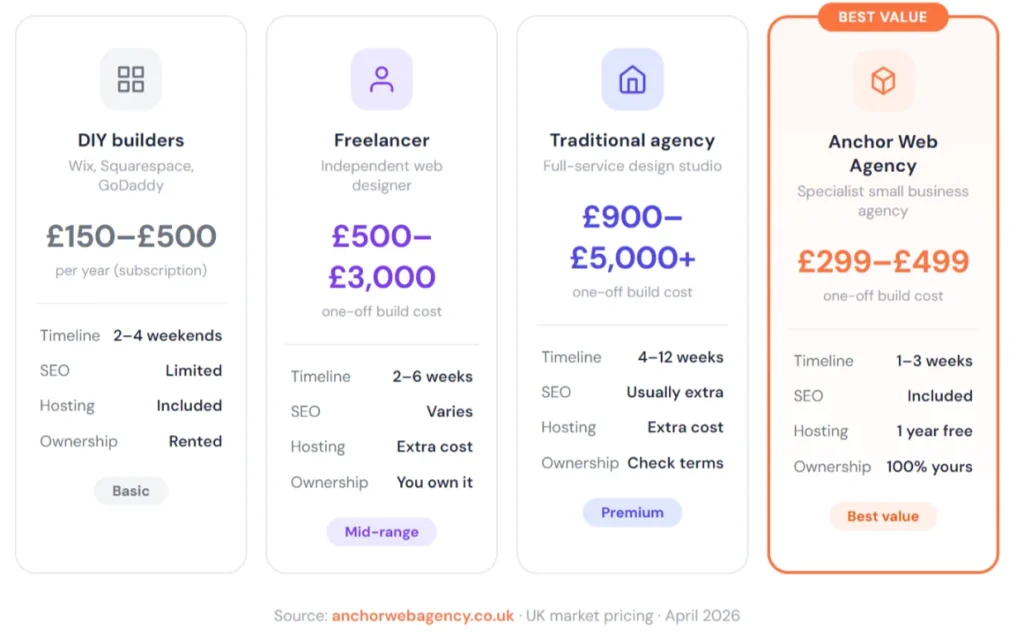
DIY Website Builders (Wix, Squarespace, GoDaddy)
- Cost: £150 to £500 per year
- Best for: Hobby projects, very early-stage businesses testing an idea
- Time investment: 20 to 40+ hours of your own time
DIY builders sound cheap, but the hidden cost is your time. Most small business owners spend two to four weekends building their first site, only to end up with something that looks a bit amateur and doesn’t rank on Google.
You also don’t truly own the site. Stop paying the monthly subscription, and your website disappears. As a result, you’re renting your online presence rather than owning it.
For a business that’s serious about getting customers online, DIY builders are rarely the best long-term investment.
Freelance Web Designers
- Cost: £500 to £3,000 for a simple site
- Best for: Businesses needing custom design on a moderate budget
- Timeline: Two to six weeks
A good freelancer can deliver a clean, professional website at a reasonable price. The downside? If they get ill, go on holiday, or simply disappear, your project stops. Ongoing support can also be inconsistent, and finding someone else who can work on their code later isn’t always easy.
Therefore, always ask freelancers about their ongoing support process before committing.
Traditional Web Design Agencies
- Cost: £900 to £5000+ for a standard small business website
- Best for: Larger businesses with complex requirements
- Timeline: Four to 12 weeks
Traditional agencies bring teams of designers, developers, and project managers. The quality is usually high, but so is the price. For many sole traders and small businesses, spending £2,000+ on a website simply isn’t realistic, especially when you’re just getting started.
The output can be excellent. The cost is hard to justify when your budget is tight and you need every pound working as hard as possible.
Affordable Specialist Web Agencies (The Sweet Spot)
- Cost: £499 to £999 for a professional WordPress website
- Best for: Sole traders, startups, and small businesses who want quality without the huge price tag
- Timeline: One to three weeks
This is where things get interesting. A growing number of specialist agencies now offer professional WordPress websites at prices that would have been unthinkable a few years ago.
At Anchor Web Agency, for example, a Starter Business Website costs just £499, and a Professional Business Website with multiple service pages and lead generation features costs £999. Both include free hosting for the first year.
You might wonder how that’s possible when other agencies charge £3,000+. It comes down to efficiency, not cutting corners. By specialising in WordPress for small businesses, using proven frameworks, and keeping overheads low, it’s possible to deliver genuinely professional websites without the inflated agency price tag.
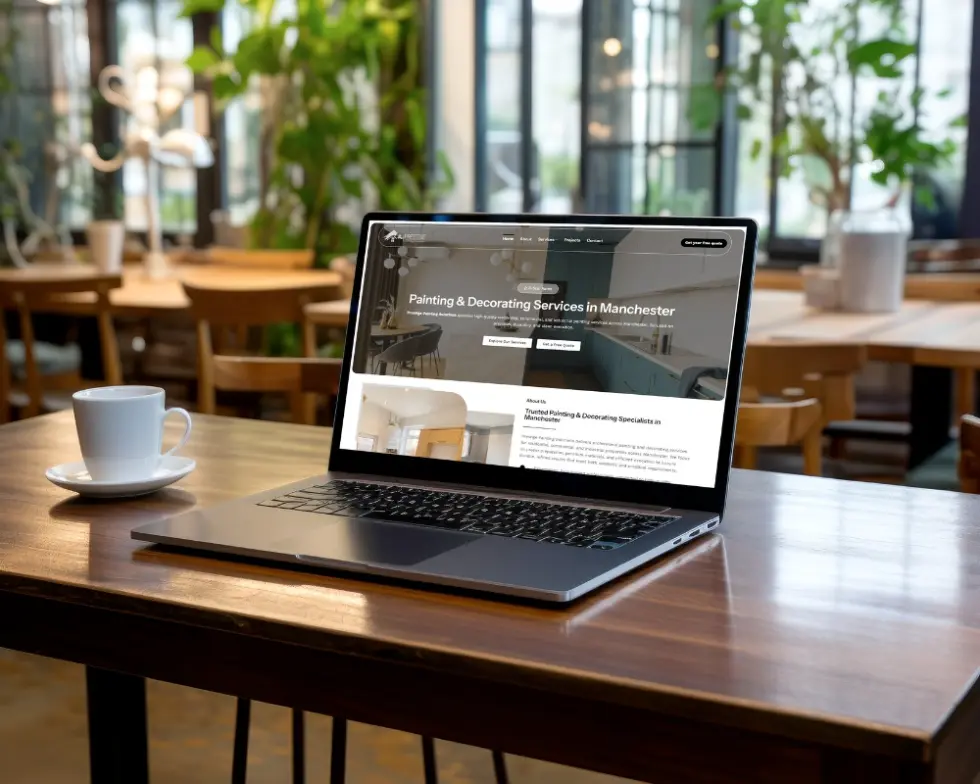
We built a full website for Prestige Painting Solutions for just £300. A professional painting and decorating business that needed a clean, mobile-friendly site to start getting local enquiries. The site was designed, built, and launched quickly, and we’re now also managing their Google Ads and SEO for £200 per month.
For Pitstop66, we built a professional website for £499. They received their first customer lead within three weeks of going live. That’s a real return on a modest investment.
Ongoing Website Costs You Need to Budget For
The build price is only part of the picture. Once your website is live, there are recurring costs that keep it secure, fast, and functional. Ignoring these is one of the quickest ways to waste your initial investment.
Domain name costs between £10 and £20 per year for a .co.uk or .com address. You should always own this yourself. Never let your web designer register it in their name.
Web hosting typically runs from £30 to £150 per year, depending on quality. Cheap shared hosting can seriously slow your site down and hurt your Google rankings. Premium managed WordPress hosting is worth the extra cost. At Anchor Web Agency, the first year of hosting is included free with every website package.
Website maintenance covers plugin updates, security patches, backups, and performance monitoring. Without it, small issues turn into expensive problems. A hacked website costs far more to fix than to maintain. Professional website maintenance plans start from just £29 per month.
SSL certificate keeps your site secure and is essential for Google rankings. Most good hosting providers include this for free. If yours doesn’t, that’s a red flag.
Content updates are something most business owners handle themselves. However, if you need regular blog posts or page updates for SEO purposes, budget £100 to £300 per month for professional content.
Here’s a realistic first-year cost summary:
- Budget-friendly route (specialist agency): £299 build + £0 hosting (included) + £29/month maintenance = approximately £650 in year one
- Mid-range route (freelancer): £1,500 build + £100 hosting + £50/month maintenance = approximately £2,200 in year one
- Premium route (traditional agency): £5,000 build + £150 hosting + £100/month maintenance = approximately £6,350 in year one
What Should Your Website Actually Include?
Not every small business needs a 20-page website with animations and custom features. For most, a well-built five to eight page WordPress site covers everything you need to start generating enquiries.
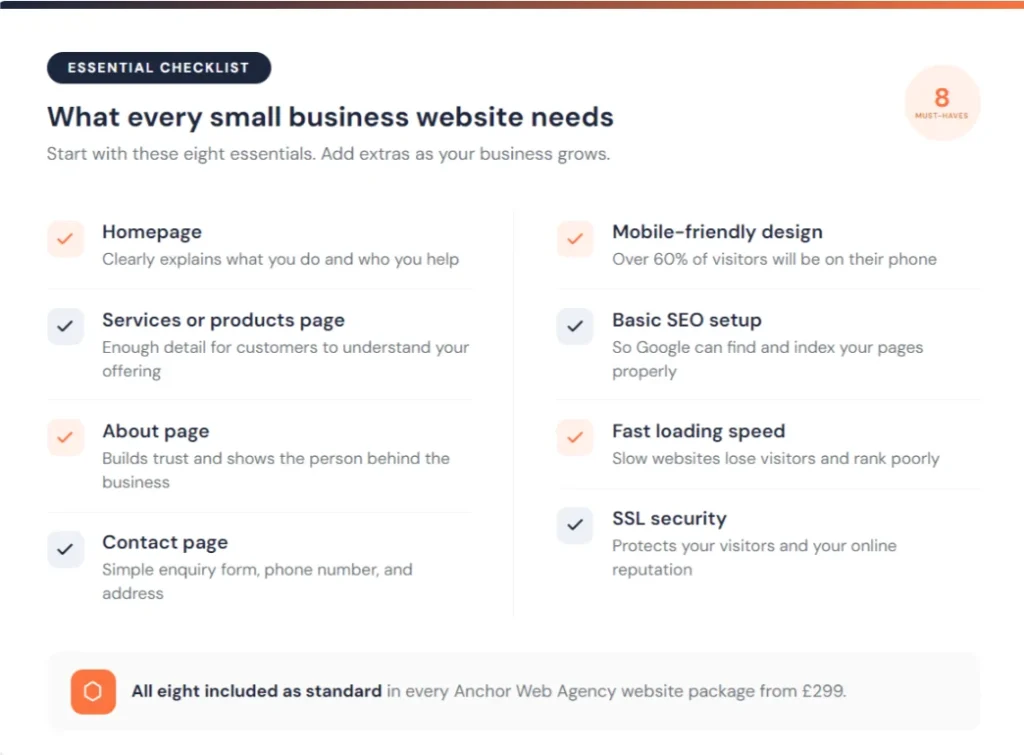
At minimum, your website should include:
- Homepage that clearly explains what you do and who you help
- Services or products page with enough detail for customers to understand your offering
- About page that builds trust and shows the person behind the business
- Contact page with a simple enquiry form, phone number, and business address
- Mobile-friendly design because over 60% of your visitors will be on their phone
- Basic SEO setup so Google can find and index your pages
- Fast loading speed because slow websites lose visitors and rank poorly
- SSL security to protect your visitors and your reputation
Everything beyond this (booking systems, eCommerce, blog, customer portals) is valuable but can be added later as your business grows. Start with what you need. Scale when it makes sense.
eCommerce Website Costs in the UK
If you need to sell products online, the costs are slightly higher because of the additional complexity. Payment gateways, product pages, stock management, and shipping calculations all add to the build time.
For a small eCommerce website built on WooCommerce or Shopify:
- DIY (Shopify): £300 to £600 per year (plus transaction fees)
- Freelancer: £2,000 to £5,000
- Traditional agency: £5,000 to £20,000+
- Specialist agency: From £399 at Anchor Web Agency
For a growing small business with up to 50 products, a Starter Shop package at £399 provides everything you need to start selling online without overspending.
How to Avoid Overpaying for Your Website

Thousands of small business owners overpay for their website every year. Here’s how to make sure you don’t.
Get a detailed quote in writing. If an agency can’t tell you exactly what’s included, that’s a warning sign. Ask specifically about hosting, domain, content, SEO setup, and ongoing support. Are they included or charged separately?
Don’t overbuild on day one. You don’t need every feature from the start. A clean, fast, well-structured website that you can grow over time is far better than an expensive site packed with features you’ll never use.
Ask about ownership. Make sure you own your domain, your content, and your website files. Some agencies hold these hostage to keep you locked in.
Check what happens after launch. A website without ongoing maintenance is a ticking time bomb. Ensure there’s a clear plan for updates, security, and support.
Don’t confuse price with value. A £5,000 website that doesn’t rank on Google and doesn’t generate leads is worse value than a £299 website that’s properly optimised and starts bringing in enquiries within weeks. Our client Pitstop66 proved exactly that.
At Anchor Web Agency, we only take 30% upfront. You pay the balance after the website is completed and you’re happy with it. That way, the risk is on us to deliver quality, not on you to hope for it. See our full pricing and packages for complete transparency.
Why Anchor Web Agency Prices Websites From £299
Most articles you’ll read about website costs in the UK will tell you that a professional agency-built site starts at £900 or more. We disagree.
We started Anchor Web Agency because we saw too many small businesses being priced out of having a proper online presence. Sole traders, local service businesses, and startups were being told they needed to spend thousands just to get online. Many couldn’t afford it and ended up with no website at all, or a DIY site that did nothing for their business.
Our founder, Nouman, has built websites for businesses across Birmingham and the wider UK, from painters and decorators to car garages and beyond. The goal has always been the same: help small businesses grow by giving them a professional website that actually works, at a price that doesn’t break the bank.
We keep costs low by specialising, not by cutting corners. Every website is built on WordPress with mobile-first design, on-page SEO, and fast hosting included as standard. You can see examples of our work on our portfolio page.
Want to find out exactly what your website would cost? Get a free, no-obligation quote and we’ll give you a straight answer with no surprises.
Frequently Asked Questions
How much does a basic website cost for a small business in the UK?
A basic five-page professional website for a UK small business costs between £299 and £5,000 in 2026, depending on who builds it. DIY builders start from around £150 per year, freelancers typically charge £500 to £3,000, and traditional agencies charge £900+. Specialist agencies like Anchor Web Agency offer professional WordPress websites from just £299.
What are the ongoing costs of running a website in the UK?
Ongoing costs include domain renewal (£10 to £20 per year), web hosting (£30 to £150 per year), and website maintenance (£29 to £100+ per month). Budget between £500 and £2,000 per year for ongoing website expenses, depending on the level of support and hosting quality you choose.
Is a cheap website worth it for a small business?
It depends on what “cheap” means. A low-cost website that’s professionally built, mobile-friendly, and optimised for search engines can deliver excellent value. A cheap DIY site that doesn’t rank on Google and doesn’t convert visitors will cost you more in lost business than you saved on the build. Focus on value, not just price.
Should I use a website builder or hire a professional?
If you have limited funds and plenty of spare time, a website builder can work as a short-term solution. However, for most small businesses serious about growing, a professionally built WordPress website offers better SEO performance, more flexibility, and a more professional image. It’s an investment that typically pays for itself through increased enquiries and sales.
How long does it take to build a small business website?
A simple brochure-style website typically takes one to three weeks with a specialist agency, two to six weeks with a freelancer, and four to eight weeks with a larger agency. DIY builds can take two to four weekends of your own time, depending on your technical skills and how much content you need to create.
Can I upgrade my website later as my business grows?
Absolutely. One of the biggest advantages of WordPress is its scalability. You can start with a simple five-page website and add features like eCommerce, booking systems, blog functionality, and additional service pages as your business expands. Building a solid foundation first is far smarter than overbuilding on day one.