

Written by Nouman Sajjad, Founder, Anchor Web Agency · Last updated 2 November 2026
Most small-business owners first hear the word “backlink” from an SEO report or from a cold email offering to sell them some. Neither explains much. A backlink is a piece of clickable text on a different domain that sends people to your site. Google reads those digital endorsements as a ranking factor that builds authority over time. This guide covers what backlinks are, why they still count as search engines evolve, and how a local business can earn them naturally through the business relationships it already has. In our view, that’s the most sustainable route there is.
What Is a Backlink?
A backlink is a link on another website that points to a page on yours. Google treats it as a vote of confidence when it decides which pages rank, and readers can follow it straight to your site. SEOs also call it an inbound link, and some tools label backlinks “incoming links”. All three terms mean the same thing.
Search engines have treated these links as a vote of confidence for decades. When an external site chooses to link to you, it’s telling its readers your page is a reliable source worth their time. Google uses that signal to judge which pages look trustworthy enough to show near the top of its results.
A backlink is also a literal pathway to your site. Readers click through to you, and Google’s crawler follows the same link, so crawling the web and finding your site are partly the same job. A trade blog linking to a supplier’s price calculators is an everyday example. So is a local news story linking to the business it quotes.
The most useful way to think about a backlink is as someone else being willing to recommend you in public. Seen that way, it’s easier to tell which links are worth chasing and which are worthless.
What Different Kinds of Backlinks Are There?
Backlinks differ in where they sit, what they say and which link attribute they carry, and those three details decide most of their value.
Every backlink has the same basic structure. There’s the link source (the site doing the linking), the visible words a reader clicks, and the destination URL on your site. From the other website’s side, that same link is one of its external links, outbound links or outgoing links. It’s only a backlink from where you’re standing.

Position matters too. A link written into the body of an article, which SEOs call editorial placement, tends to count for more than one tucked into a footer or sidebar. Google’s reasonable surfer patent describes weighting links by how likely a real person is to click them. On a page with high link density, each link gets less attention. Nobody outside Google can confirm exactly how this is applied today.
Then there’s the attribute in the code. A standard dofollow link can pass ranking value, and a nofollow link asks Google not to count it. Wikipedia marks every outgoing link as nofollow, but those links still send visitors. A mention of your company name in an article on your topic, or a place on well-kept resource pages, can be valuable whichever attribute it carries.
Why Do Backlinks Matter for SEO?
Backlinks matter because Google still uses them to decide which pages deserve to rank, and because each one can send real visitors on its own.
The ranking side works through link equity, sometimes called link juice. A strong page can pass authority to the pages it links to. How much passes depends heavily on topical relevance and source credibility. A Birmingham plumber linked from a regional heating trade body gains more than the same plumber linked from an unrelated gadget blog.
The visitor side is easy to forget. A link on a page people actually read brings referral traffic whether or not Google counts it. Steady referral traffic growth in your analytics is the clearest sign a link is earning its keep. Better rankings then bring more organic traffic, so the two effects build on each other.
You don’t need thousands of links to compete locally. For Pitstop 66 in Manchester, our work focused on service-specific landing pages and local SEO targeting Manchester and the North West. Links were one part of that picture, not the whole of it. If you want the wider plan, see how to get your website on the first page of Google. Every link you chase should also sit comfortably within Google’s guidelines, which are covered further down this page.

Do Backlinks Help You Appear in AI Search?
Yes, backlinks appear to help, because AI answer tools rely on the same signals of authority that search engines already use.
Google’s AI Overviews sit on top of Google Search, and tools such as ChatGPT and Perplexity cite web sources when they answer questions. Semrush describes your links as a credibility record that both ordinary search and AI systems read. A Semrush study found that high-quality backlinks meaningfully improve visibility in AI answers.
Unlinked brand mentions seem to count for something too, because these systems learn which businesses get named alongside a subject. So the practical route into AI answers for a small firm is often being quoted. Writers post media requests on platforms such as HARO (Help a Reporter Out), Qwoted and Featured, now called Connectively, to find expert comments, and a useful reply can earn a mention or a link. Publishing original data, even a simple survey of your own customers, gives them something to cite.
What Makes One Backlink Worth More Than Another?
A backlink is worth more when it comes from a credible, relevant site, sits naturally in the article and uses honest wording. It’s worth little or nothing when it was placed to game rankings.
Editorial backlinks, the ones a writer adds because your page helps their reader, are the gold standard. A mention in The Guardian carries obvious weight. For a local trade, a link from its trade association can be just as useful, because the editorial context matches what you do. The anchor text matters as well, because plain, accurate wording reads as genuine.
The attribute on a link changes what Google is told:
| Link type | What the code says | What it does for you |
|---|---|---|
| Standard (dofollow) | No attribute | Can pass ranking value; most link building aims for this type |
| Nofollow | rel=”nofollow” | Google treats it as a hint, not a block, and it still brings visitors |
| User-generated | rel=”ugc” | Marks forum posts and comments; usually little ranking value |
| Paid but not labelled | An undisclosed paid link with no attribute | Breaks Google’s link spam policies and risks a penalty |
Semrush’s research with Kevin Indig across 1,000 domains found nofollow links performed almost as well as followed ones for AI visibility. That’s one reason a healthy backlink profile usually holds a mix of both. What Google will ignore, or penalise, is manipulation at scale: excessive link exchanges, paid placements and keyword-stuffed links. In a competitive niche, the winners tend to have better links, not simply more of them. Google’s systems are built to reward pages that improve the user experience for their readers.
Should You Buy Backlinks?
No. Buying backlinks to improve rankings breaks Google’s spam policies and can get your site penalised.
Paid placements aren’t banned outright. A sponsored mention marked rel=”sponsored”, or an affiliate link with the right label, is fine because it tells Google not to count it for rankings. The problem is the link bundles sold by cold email. In our experience these usually turn out to be spammy blogs that exist only to sell links.
Self-created links are the other trap. Dropping your URL into forums and blog comments rarely helps, most of those links are nofollow anyway, and communities such as Reddit ban accounts that do it. Repeating keyword-heavy wording instead of descriptive anchors doesn’t help either, and neither do lazy “click here” links scattered everywhere.
If bad links already point at you, Google mostly ignores them, so you rarely need to disavow anything. Disavowing wrongly can hurt your visibility. Your money is better spent on things people link to by choice. That means useful resources, linkable assets such as infographics, small digital PR stories, and case studies or testimonials you give to suppliers, which often get published with a link back.
How Can a Small Business Get Backlinks?
A small business gets backlinks by giving other sites a genuine reason to link: as a supplier, a member, a source or a useful resource.
Start with the links you’ve already earned offline. These are the sources we check first:
- Supplier and partner sites: brands you stock or work with often keep partner pages or stockist lists, and partnerships like these are easy to ask about.
- Memberships: trade associations, chambers of commerce and accreditation bodies usually publish member listings with a link.
- Local press: journalists need comments, and one quote in a regional news blog post can bring a lasting link.
- Unlinked mentions: search for your business name. Where a site mentions you unlinked, a polite email asking them to add the link often works.
- Guest articles: a guest post on a relevant site with named authors and real bylines is fine. The same article spread across dozens of irrelevant sites is a grey area that Google treats as a scheme.

Manual research finds the rest. Google searches like “best tools for [your industry]” or “[competitor name] review” turn up roundup articles that might include you. That outreach costs time rather than money, so most of it is free. Avoid automated link software and any low-quality directory that accepts everyone. A handful of real directory entries is plenty. In the end, content quality decides whether people cite you without being asked.
If you’d rather hand this over, link building and digital PR outreach are part of our Authority SEO plan at £699 a month. You can compare all three tiers on our pricing page, see what’s included in our SEO services, read how much SEO costs in the UK, or speak to our SEO agency Birmingham team about a free quote.
How Do You Check Whether Your Backlinks Are Working?
You check backlinks by looking at who links to you, whether those sites are credible, and whether rankings and visits improve over the following months.
Among the free tools, Google Search Console’s Links report shows your top linking sites, top linked pages and top linking text. Paid tools from providers such as Morning Score and Neil Patel add competitor comparisons and third-party scores like Authority Score. Treat those scores as estimates, because these evaluators are approximations and Google doesn’t publish an authority score of its own.
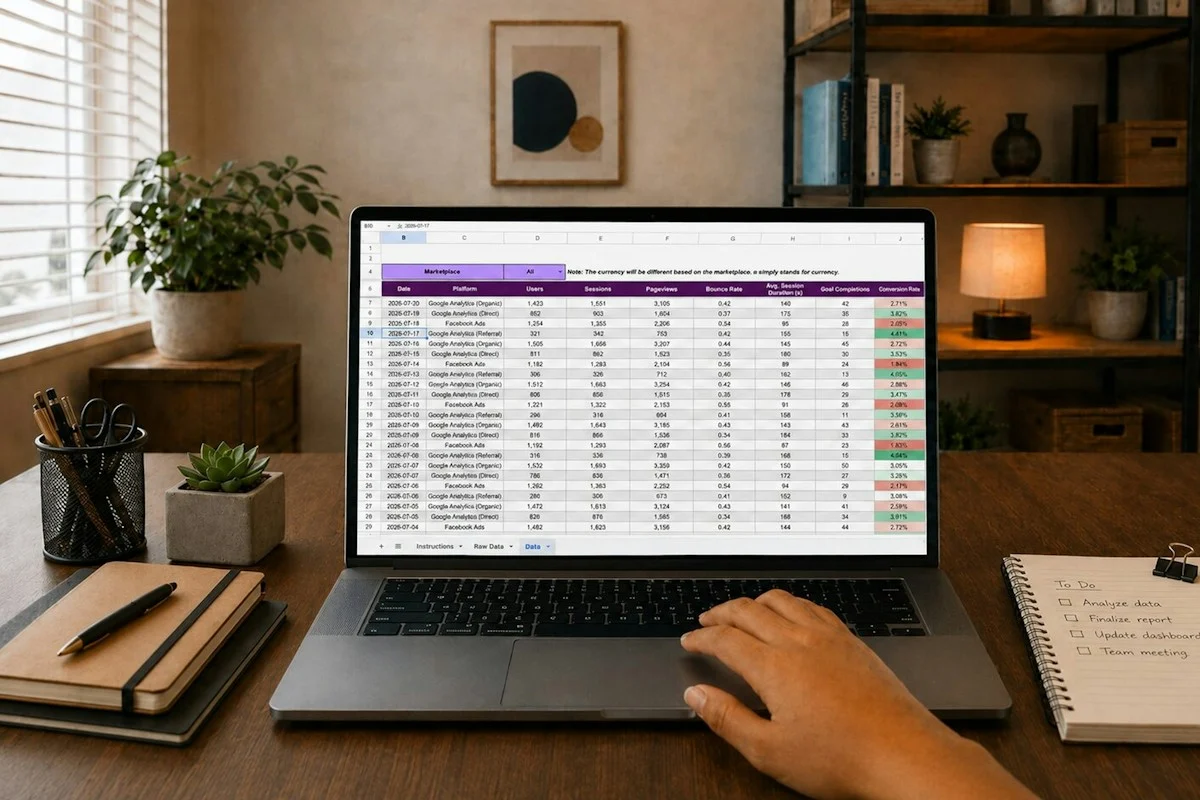
When we review a client’s links, we look at who is linking and whether they’re real businesses. We also check whether rankings for the client’s target keywords are improving, and whether the wording on the links looks natural. A profile full of exact-match anchors looks over-optimised and can be harmful. On your own site, the engagement metrics for referral visitors show whether links are bringing the right people.
Will Backlinks Still Matter in Future?
Backlinks are very likely to keep mattering, because links have been part of how Google ranks pages since its first algorithm.
In 1998, Larry Page and Sergey Brin built PageRank, which treated links between sites as votes. Nearly 30 years and thousands of updates later, links are still a signal. In 2024, Google’s Gary Illyes suggested at SERPCon that links were becoming less important, then corrected himself almost straight away, according to Backlinko.
What’s shifting is the weight placed on context. Backlinko’s Authority Signal Stack describes three layers: editorial links, mentions in articles, and the ambient presence a brand builds on forums and social media. Co-citation, meaning being named next to recognised businesses in your field, appears to feed AI visibility in Google’s AI Mode and similar tools. Judge link work by long-term trends in rankings and organic traffic, not by any single link.
What’s the Difference Between a Backlink and an Internal Link?
A backlink comes from another website, while an internal link connects two pages on your own site. They do distinct jobs. Backlinks build authority from outside, and internal links help Google understand how your site fits together and share that authority between your pages. Internal links never add to your referring domain count, however many you add. Our on-page SEO checklist covers internal linking in more detail.
Backlinks vs Referring Domains: What’s the Difference?
A backlink is a single link, while a referring domain is a whole website that links to you at least once. If one directory links to you from 40 pages, that’s 40 backlinks but only one referring domain. Backlinko’s ranking correlation study found the number of sites linking to you correlated with rankings more than any other factor. So unique domains count for more than repeat links from the same website, and a sensible rule of thumb is to value variety over volume. Unlike an internal link, a backlink always comes from outside your site.
What Is a Backlink Profile?
A backlink profile is the full picture of every site linking to you, the pages they point to and the wording they use. A healthy profile has links from many different sites, a natural spread of top anchors and a steady link velocity rather than sudden spikes. A site that links to you multiple times still counts as one referring domain. If you spot obvious spam, you can ask the site owner to remove it, although Google usually ignores it anyway.
Why Are My Backlinks Not Showing Up?
Backlinks usually don’t show up because Google hasn’t found or processed them yet, or because the report you’re checking only shows a sample. Googlebot has to discover the linking page and get it indexed before the link registers, which can take weeks or months. Google’s Links report isn’t the full collection of your links: it can leave out URLs, caps its tables at 1,000 rows and may still list links that have since gone. Each backlink checker uses its own crawler, so counts differ between tools. If the linking page now returns a 404, the link has gone. Referral visits in your analytics are the quickest proof that a link is live.
How Do I Find My Competitors’ Backlinks?
You find competitors’ backlinks by entering their domain into a backlink tool and opening its referring domains report. Semrush, Ahrefs and Moz all do this, with historical data on paid plans. Each scores sites with its own metric: Authority Score, Domain Rating and Domain Authority respectively. Look for sites that link to several competitors but not to you. A quick audit of their deleted pages can also turn up broken link building opportunities, where you offer your page as the replacement.
How Many Backlinks Do I Need to Rank?
There’s no set figure. You need links of roughly the same quality as the pages already ranking for your keyword. Backlinko’s analysis of 11.8 million search results found the first result had 3.8x more backlinks than positions two to ten, but that’s an average across every topic. For a local service business, check competitor backlinks in a referring domains report for the three or four firms above you, then compare. Your total backlink count matters less than who is linking, so track keyword rankings as you add links rather than chasing a target number.
Should I Disavow Toxic Backlinks?
Usually not. Only disavow toxic backlinks if you have a lot of harmful links you can’t get removed and you’ve received, or are at risk of, a manual penalty. A toxicity score in an SEO tool is an estimate, not a verdict from Google, and there’s no fixed number of spammy links that means you must act. Google already ignores most link schemes, and disavowing good links by mistake can cost you rankings. If a past SEO provider used black hat tactics and you’ve received penalties, disavowing is the last resort:
- Run a backlink audit and sort links into healthy, neutral and toxic.
- Ask the owners of the toxic sites to take the links down.
- List what’s left in a text file, adding “domain:” before any whole domain.
- Upload the file through Google’s Disavow links tool.
Plausible notes that, in extreme cases, buying links can get a site permanently excluded from Google’s results, which is why prevention beats cleanup.